
Iron Bacteria
Iron bacteria are naturally occurring microorganisms that can be found in soils, groundwater, creeks, drains, wetlands and waterways.
What are iron bacteria?
Iron bacteria are naturally occurring microorganisms that can be found in soils, groundwater, creeks, drains, wetlands and waterways.
Why does it occur?
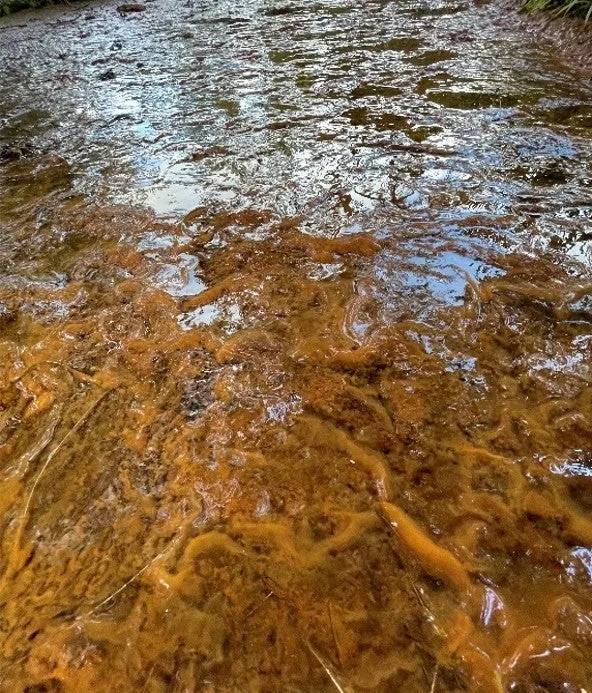
Iron bacteria uses dissolved iron as an energy source. When iron-rich water comes into contact with oxygen, iron can be converted from a dissolved form into insoluble iron oxides. This process can produce the distinctive orange, brown or rust-coloured material sometimes seen in our local waterways.
Iron bacteria are a natural part of aquatic environments and their presence does not necessarily indicate pollution or sewage contamination.
What does it look like?
- orange, red-brown or rust-coloured slime
- soft or fluffy material attached to rocks, vegetation or the bed of a creek
- brown or orange deposits around groundwater seeps or drainage outlets
- a silver, oily rainbow coloured sheen on still or slow-moving water
- fibrous or string-like material floating on the water surface.
Is it harmful?
Iron bacteria are natural and are generally not harmful to people or aquatic environments.
What should I do if I see it?
To report suspected pollution or contamination of a Sunshine Coast waterway, contact Sunshine Coast Council on (07) 5475 7272