
Invasive Weeds Project
A 5 year project conducting a variety of weed management control options and research trials using innovative technologies.
Funded by Your Environment Levy (2021-2026).
This webpage is for Sunshine Coast landholder, residents and land managers who want to learn about innovative weed management methods and how they can apply these techniques on their own land.
Overview
The Invasive Weeds Project is a five-year program funded by the Environment Levy. It aims to manage invasive weeds using new technologies and conduct research trials. The goal of the project is to remove invasive weeds, bring back native plants, and show community how they can manage weeds effectively.
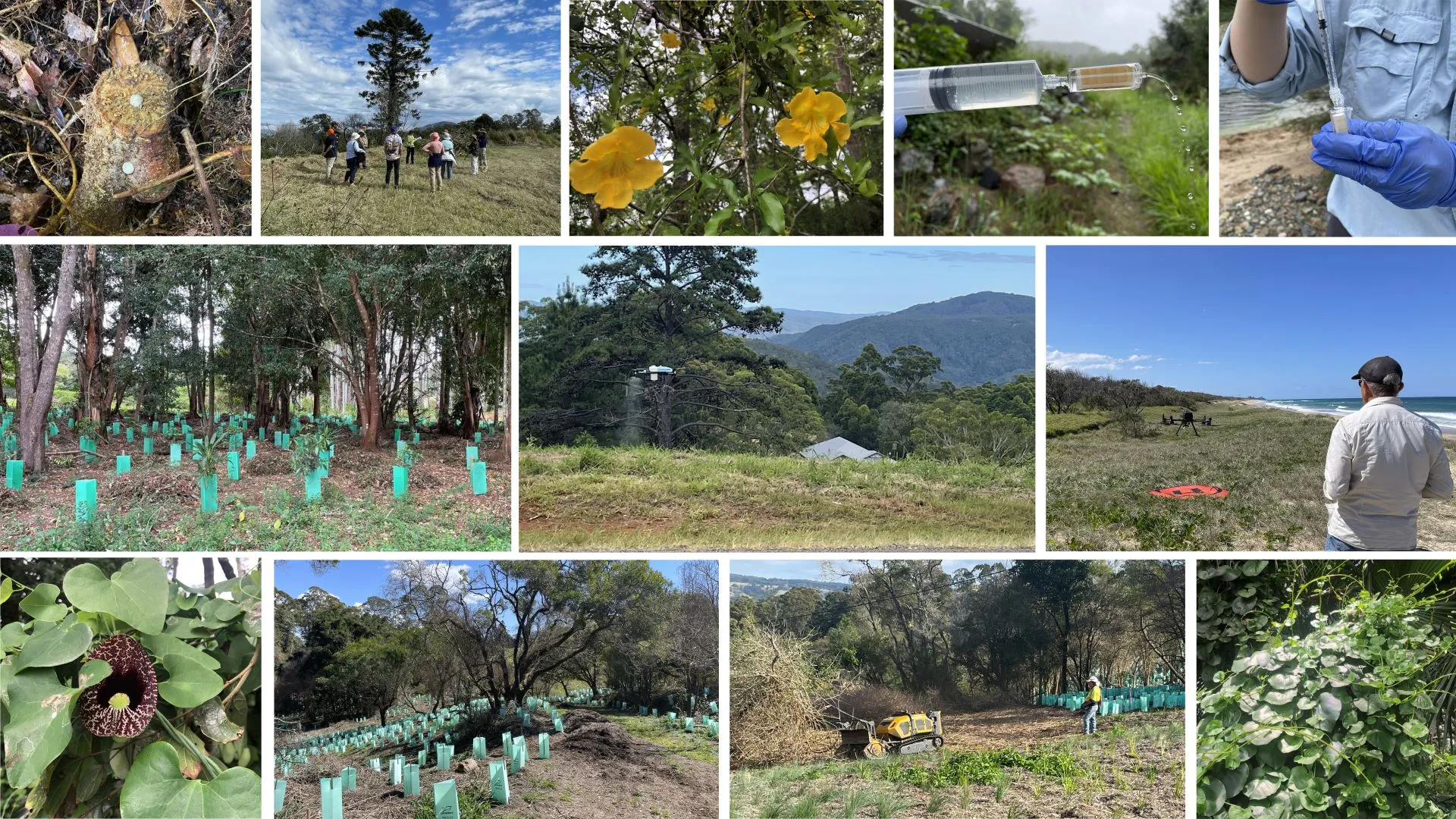
The project’s activities include:
- testing weed control methods at demonstration sites
- using artificial intelligence (AI) and drones to map where weeds are
- controlling invasive vines with herbicide capsules - small tablet-like capsules that contain herbicides which are implanted into trees
- finding invasive weeds using environmental DNA (eDNA) - a scientific method that detects plant DNA in water samples to identify invasive plants upstream.
These activities aim to help the community manage their land and protect local ecosystems and wildlife.
Key learnings
This project generated valuable insights, which are summarised into several key learnings:
- Every invasive weed situation requires a unique management strategy—site conditions and individual land-managers capacity determine what techniques are suitable and influence outcomes.
- Management is long-term—ongoing follow-up is a vital part of the process.
- Prioritise site health—slowing erosion can be a bigger priority than total eradication of weeds at first. Identify what would be a priority for your site.
- Investing in innovation is important—testing new methods can improve efficiency, safety and our ability to adapt to landscape changes.
- Collaboration is key—knowledge sharing builds strength, resilience and community connection to work better together.
You can explore these learnings in finer detail through the Resource Library where you can also find related programs.
The Invasive Weeds Project focused on three main objectives
- Undertake a variety of weed management control options and trials.
- Explore innovative weed management techniques for weed identification, monitoring, management, or surveillance.
- Share information with Sunshine Coast Council community about trial outcomes and opportunities.
The Invasive Weeds Project has undertaken several innovative trials for managing weeds.
These projects are:
- Maleny demonstration site: this site has been used to trial a range of weed management strategies. It focuses on showing the community how they can manage their land in various ways and introduces weed management.
- Witta demonstration site: this site has been used to trial innovative weed treatments and share findings with the community. It tests weed management in hard-to-access areas and on steep hillsides.
- AI monitoring for invasive weeds: this project tested new ways to monitor weeds using artificial intelligence (AI) models. These AI models predict the distribution of different weed species. Using machine learning and drone imagery, these trials aim to map broad-leaf pepper, cat’s claw, madeira vine, and camphor laurel.
- Herbicide capsule trials: this trial tested how well herbicide capsules can kill invasive weeds.
- eDNA trials: these trials check how well we can find invasive weeds using environmental DNA (eDNA).
Subpages

Interested in learning weed management techniques to suit different areas and land close to water bodies? Learn about our Maleny demonstration site.

Interested in learning how to treat weeds that are on steep terrain and challenging to manage areas? Check out our Witta demonstration site.

Check out how AI and drone imagery can be used to identify invasive and native vegetation.

See how herbicide capsules can be used to manage invasive weeds, such as Cat’s Claw Creeper vine.

Find out more about how water-based eDNA sampling can be used to monitor for invasive weed species.

The Invasive Weeds Project has conducted a variety of projects producing key findings to help manage invasive weeds in many ways. Below is a list of resources that can help you manage your weeds problems and understand more about the Invasive Weeds Project.